

|
Horse Trailer Living Quarters in Many Shapes and Sizes
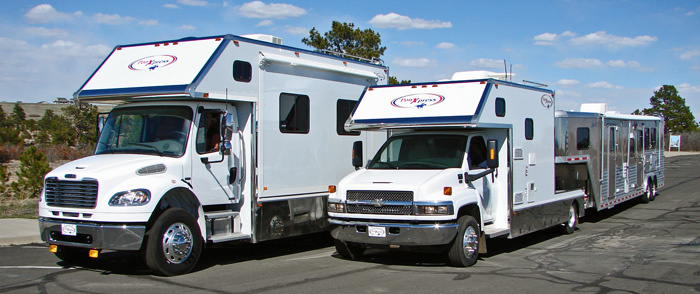
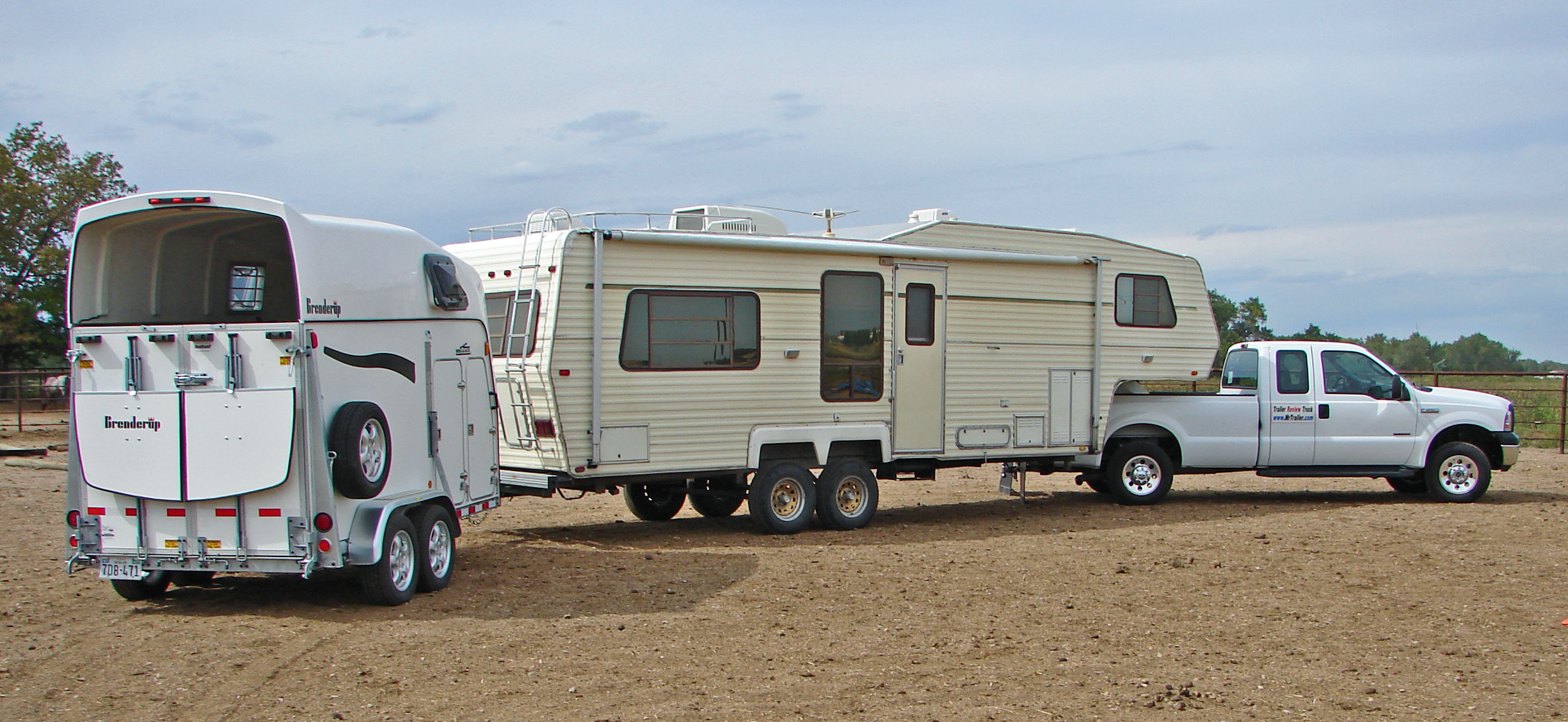
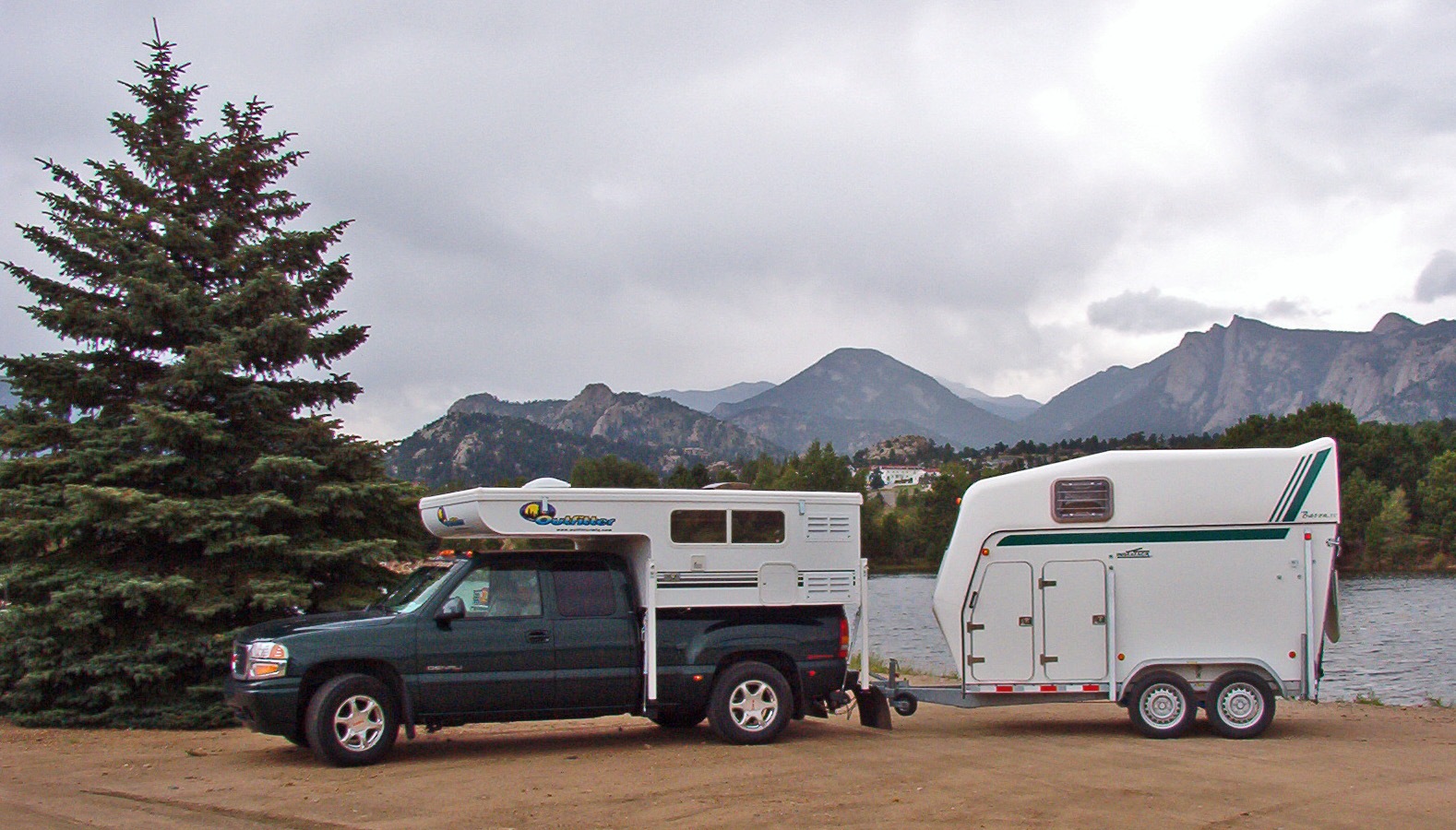
Should you go truck camper and bumper pull horse trailer, RV towing a bumper pull trailer, a LQ horse trailer or even a Toterhome towing your horse trailer? There are trailer Living Quarter options with a bumper pull LQ like a Lakota 2 horse bumper pull, with a manual tip-out wall or the popular LQ gooseneck with slide-outs for maximum room in your mobile home away from home. Find out after reading the Horse Trailer Living Quarters in Many Shapes and Sizes review.
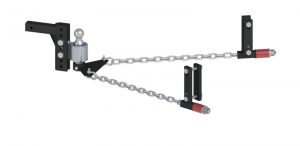
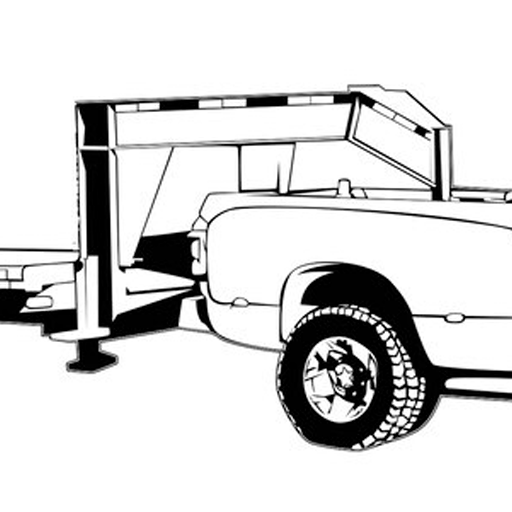
A camper can use up the majority of your trucks payload rating, not leaving much for the loaded tongue weight of your trailer which is also part of your trucks payload. Your trucks owners manual will have your payload weight rating. So add your campers loaded weight to your loaded trailer’s tongue weight and subtract from your trucks payload and see if you any capacity left for passengers. Hard sided campers weigh the most. Truck campers also have relatively small water and waste holding tanks to keep the weight down. A soft sided, “popup” camper,” will save you weight that you might need for proper payload. Because of all the weight requirements on your truck, generally you need a 3/4 ton or 1 ton truck. Ford for 2008 model, has a F450 pickup with a factory truck bed that meets the payload needs of larger campers towing trailers. Horse Trailer Living Quarters in Many Shapes and Sizes Diesel pickup trucks have the most power, but because they weigh more than a gas version, this lowers what’s left for a trailer and or camper. Manufactures rate all this by the rule of Gross Combined Vehicle Weight Rating, the max weight of truck and trailer. So the more the truck weighs, the less is left for the trailer. My truck for instance is a F250 with a little over 2200# payload. I have a max gooseneck/5th wheel rating of 15,600 lbs. and 12,000 lbs. bumper pull rating. You don’t want to exceed the payload or axle rating by the trailer tongue rating. So back to the 2200 lb. payload of my F250, if I have a slide in camper that weighs 1600 lbs., then I only have 600 lbs. left for the trailer tongue weight, me and fuel. Attaching the camper to the truck is important ranging from a Happijac system of attaching the camper to the truck bed and bumper or attaching to the trucks frame with a Torklift system. I recommend using a weight distributing hitch on the trailer to spread out the weight to all axles of the truck and trailer. This very is important for bumper pull LQ trailers. Back to my F250 truck example with the class V receiver hitch rated by Ford at 12,000 lb bumper trailer (conventional) capacity, using a receiver hitch extension is only good for 1/3 less, or 8000 lbs. for the trailer. Rule of thumb for bumper pull trailers is 10% tongue weight, 800 lbs which puts me over my factory payload rating. For the longest camper, you need the long bed truck which is 8 ft. A 11 ft. camper will stick out 3 ft. A 3000 lb camper will be in the one ton class depending on the year. Truck manufactures seem to increase the payload and trailer capacity each model, whether they changed anything or not.
From what I see, the most popular and fastest growing segment for taking your house with you, is the trailer Living Quarters. Bumper pull LQ’s come and go in popularity. The latest entry, is the new Lakota HUT (horse utility trailer) introduced at the All American Quarter Horse Congress in Ohio a few years back. What was different from other bumper pull Living Quarter trailers that I’ve seen over the years, was a mechanical tip out room. The tip out panels open by hand with the help of hydraulic struts. This allows for the couch to fold out into a bed. The couch also doubles as seating for the dinette. Surprising amount of room and all the necessities like a bathroom with toilet and shower. Stove, refrigerator and sink, what else would you need. A trail riders dream. Some of the national forests and back country make a large LQ trailer impractical. Usually the other solution for deep off-road adventures was a truck camper and trailer. Lakota’s compact 8′ wide 2 horse slant with a folding rear tack room, is well laid out and very similar to a large LQ. It even has the rear LQ access door to the first stall.
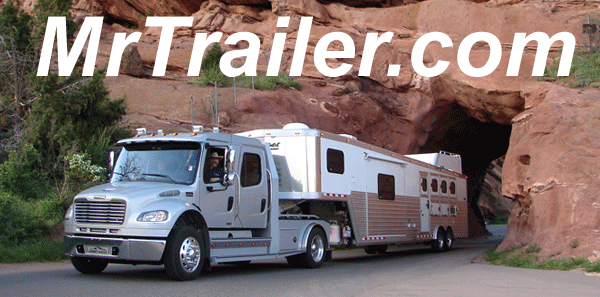
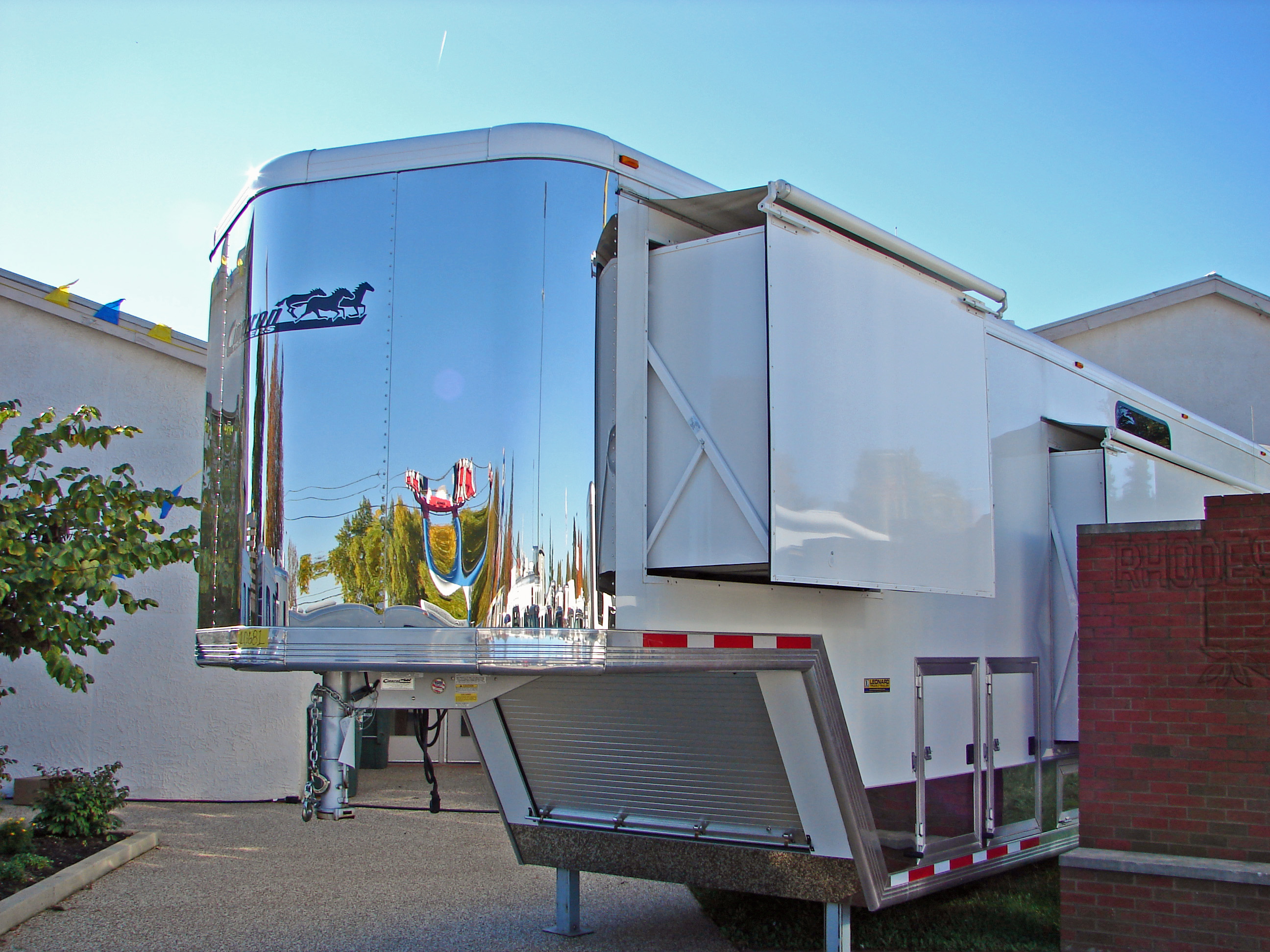
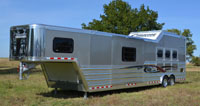
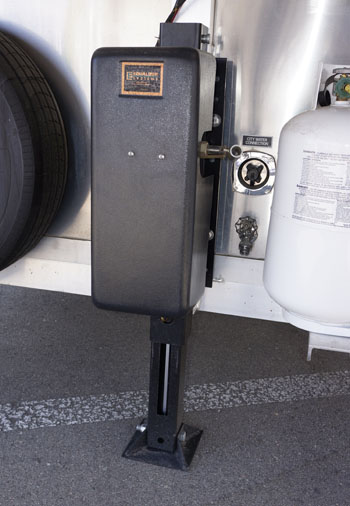
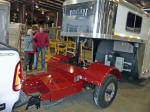
Horse Trailer Living Quarters in Many Shapes and Sizes I travel to trailer factories and watch them get welded together. Most trailer manufactures design the shell (front part of the trailer left unfinished) for the conversion companies placement of refrigerators, AC, vents, stoves etc. and for the proper reinforcement for weight and opening size. A typical LQ will add 6 to 8000 lbs. to the trailer. This means towing a LQ trailer is basically loaded all the time. This also means the angle of the torsion axles or air bag axles for wheel travel and ride characteristics along with tires size, load rating and axle rating, all is important. You can buy a LQ trailer will all the figuring done for you can custom order all the features you want and proper capacity specs worked out between you and the dealer. Most horse trailer manufactures have engineers that review the plans you and the dealer put together on a custom built LQ trailer to ensure it’s safe. Horse trailers can last decades, so plan well what you want and for the future resale value of your trailer. Well built LQ goosenecks do hold their value. Because of the cost of the trailers and length of time you may own it, consider having an extra stall just for storage that can be used for another horse later on. You can look through online trailer listings such as www.HorseTrailerWorld.com to see what size of trailers are the most popular and what is the scarcest. A common statement you hear with sales folk is to buy a 3 horse even if you only need 2 stalls, because of resale value. Which coincides with what I just said, but on the other hand, try to find a 2 horse gooseneck LQ and they seem to be rare, so the resale value is fine right now. Another option is to finish a LQ yourself. Yes it may save you some money if you are very talented at building or remodeling houses. There are so many details to consider, insulation, wiring, converters, invertors. vents, bracing, plumbing and even the escape windows in the neck. If this is an option for you, be sure to pick a solid trailer that can handle the extra weight on the neck frame, axles, floor etc. Factory LQ’s have extra bracing in the roof for AC’s and vents. The nose frame and floor has to be reinforced properly to keep cabinets and mirrors from cracking. Then there is those wonderful holding tanks. Fresh water, grey water and black which all had to the weight of the trailer. Factory LQ trailers have reinforced and designed flooring for these tanks. Some even have skid plates to protect the tanks and are positioned in front of the axles to prevent being dragged off. Hawk trailers have an interesting design with the LQ floor elevated to have room for the holding tanks flush with the horse floor. Should you get slide-outs in your LQ? Very popular in the RV industry, they do give you more room and an open feeling. We all like room. Bison trailers, coping the RV industry has the only flush floor slide-out in a horse trailer, so you don’t trip getting to the dinette. This is not easy as the floor of a horse trailer is usually part of the frame where it’s not on most RV’s, so cutting the floor for a flush slide out floor takes a lot of reinforcing and engineering. Other conversion companies have masked the step up of a slide-out with couches that appear flush with the floor. Be sure to ask your salesman about the mechanism of the slide-out, is it hydraulic, or electric, is it self adjusting and how do you maintain it. Horse Trailer Living Quarters in Many Shapes and Sizes
Carbon monoxide and smoke detectors are standard as well as many other safety features if the trailer has the RVIA sticker. This is the Recreation Vehicle Industry Association symbol. Read more about what’s required for this label at http://www.rvia.org With LQ’s you may want a generator. AC and microwave will require at least a 3500 watt generator. A manger is an nice place to have your generator or in the hay rack is popular on large trailers. Be sure the exhaust from your generator is properly routed out of the trailer. Each year we see on the news, someone dying from carbon monoxide poisoning because of the wrong use of a generator.
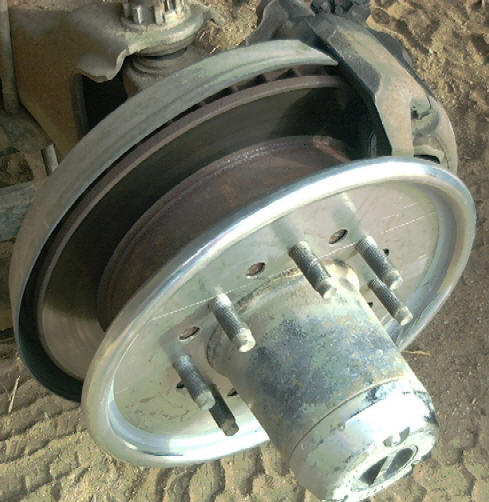
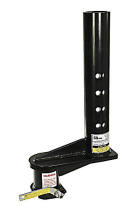
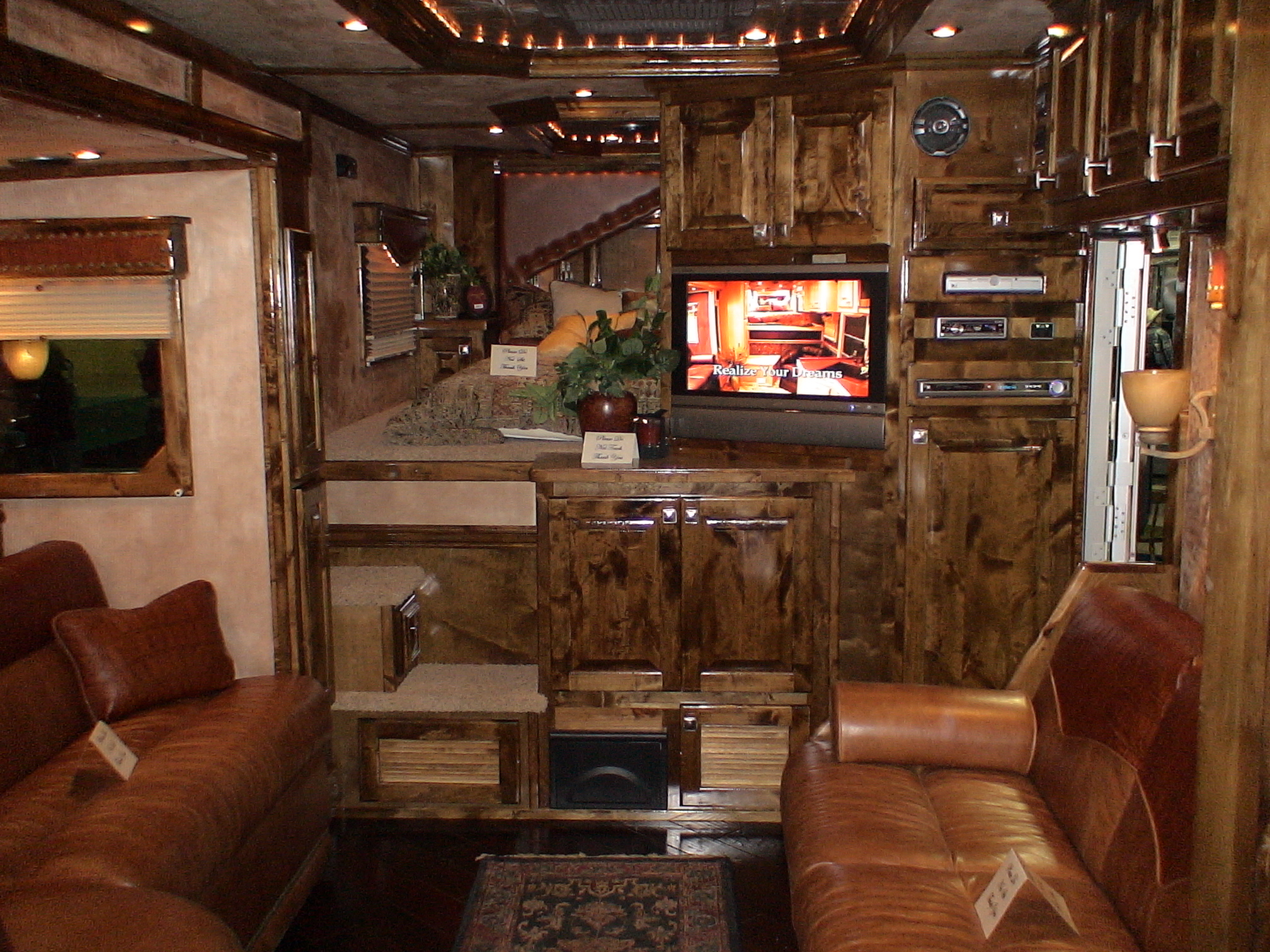
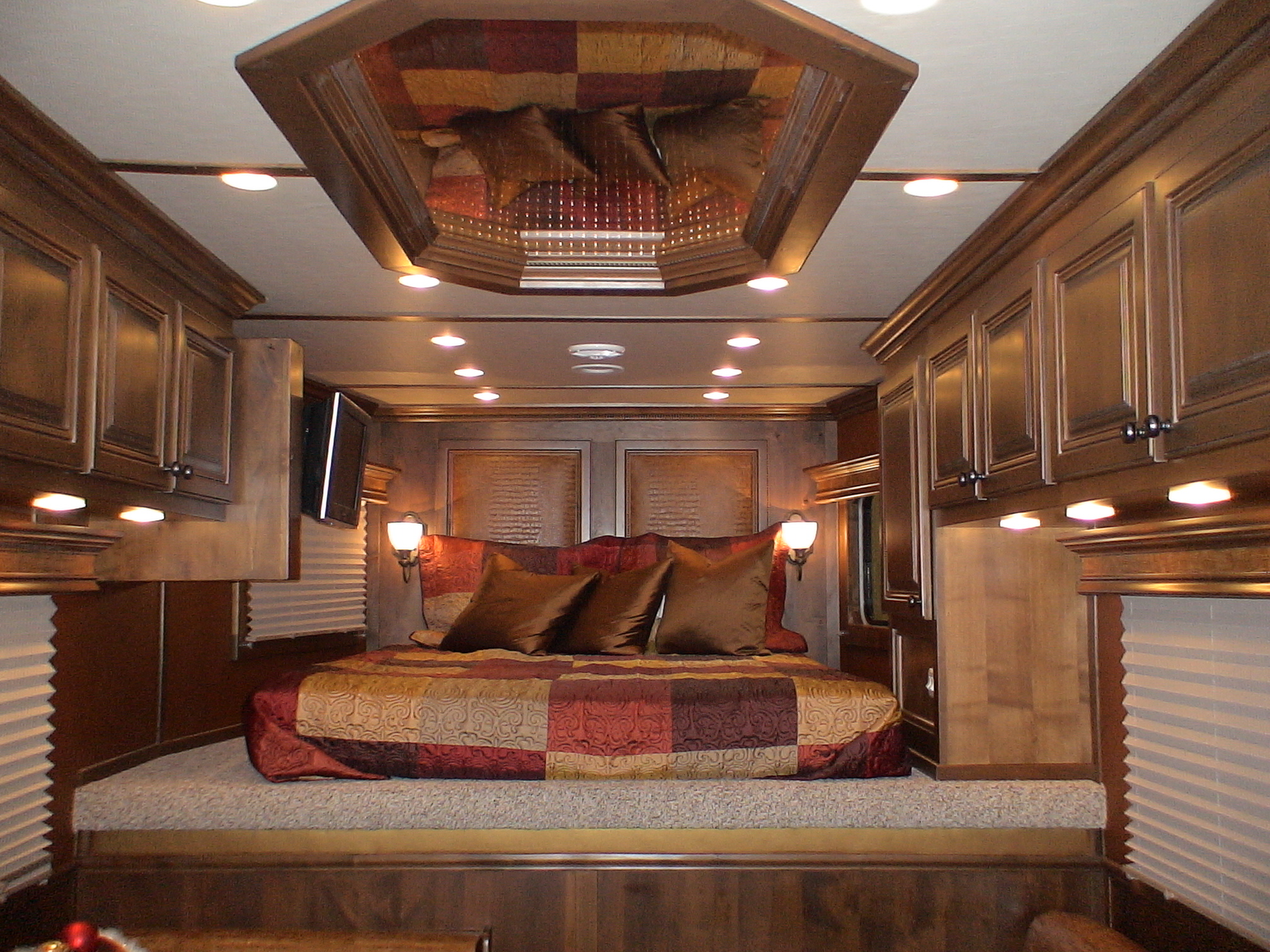
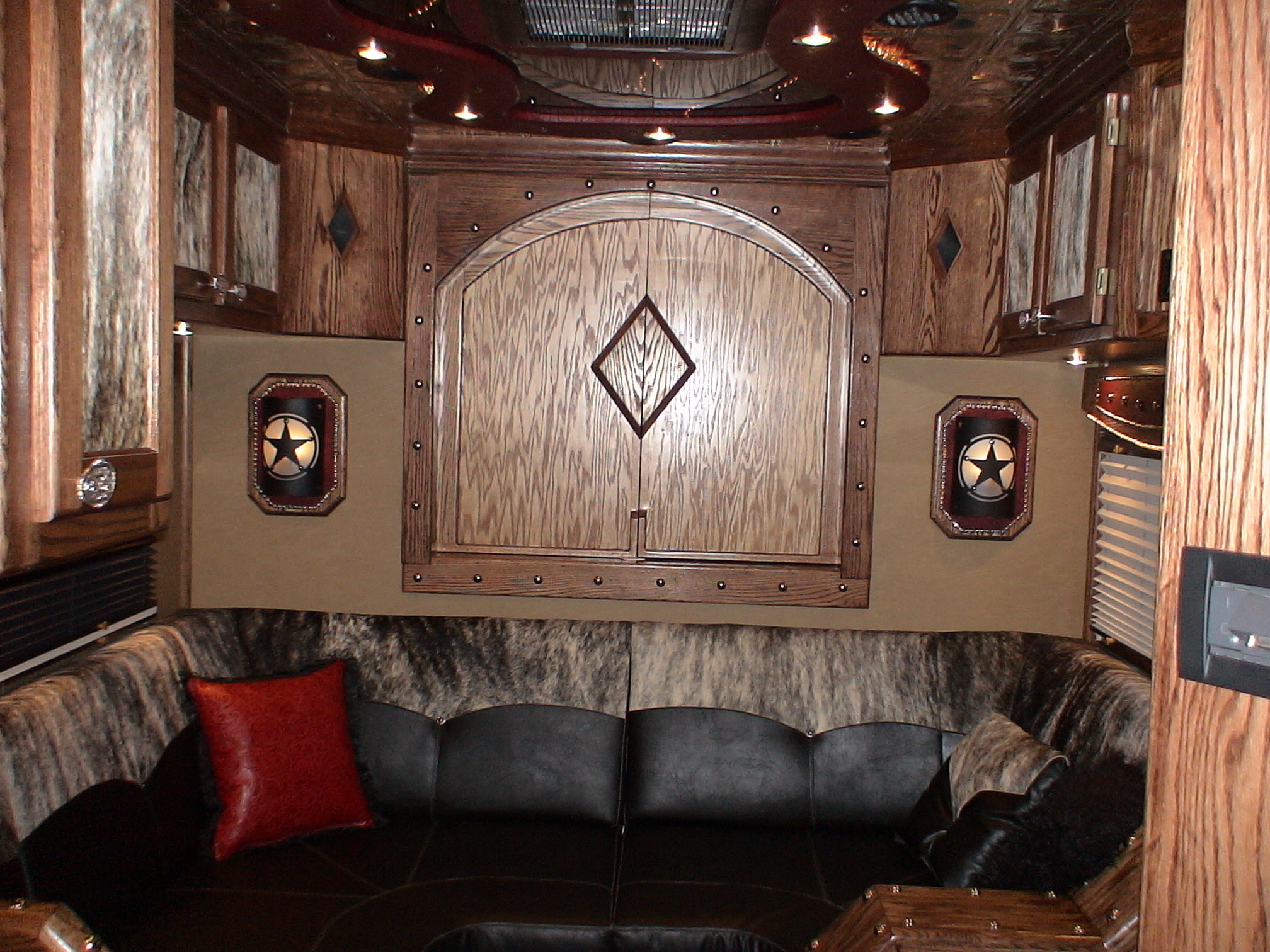
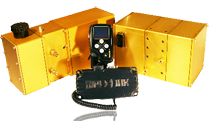
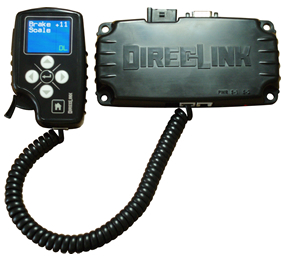
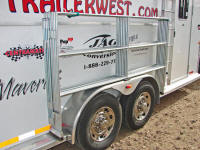
MUST Have LQ Accessories: The Latest Innovations in LQ Horse Trailer Accessories: Cimarron’s six foot gooseneck bedroom ceiling. No cave, just walk into the bedroom. LQ’s are moving toward the features of RV’s. Having an LQ makes horse events mini family vacations. Horse stall camera’s with monitor in LQ, truck and rear of the trailer from Agcam. See what’s happening. Move the camera’s around with their magnetic base. Enjoy your trailers inside, while watching your horses outside in their portable corral. Armadillo armored garden hose, from Great Terrain for dependable water supply. Your horses can’t chew threw it, Popup Gooseneck Cushion Coupler, protect your LQ investment from neck shock. Mirrors and cabinets make the gooseneck bedroom like home. Bouncing down the road is hard on your LQ. Kodiak hydraulic disk brakes. The extra weight of an LQ translates into more research on more powerful dependable brakes. Your truck has hydraulic disc brakes for decades now on the front and for at least 7 years on the rear. Hydraulic brakes is becoming more common on the larger LQ trailers. Centramatic Wheel Balancers. I’ve only found one brand of horse trailer that balancers the trailer tires at the factory. Your truck tires are balanced. Why wouldn’t you want your LQ trailer tires balanced? Reduces the vibration in your expensive trailer. |






 Automatic Tire Balancers for Trucks and Trailers25% to 50% longer tire life,
  Automated Safety Hitch


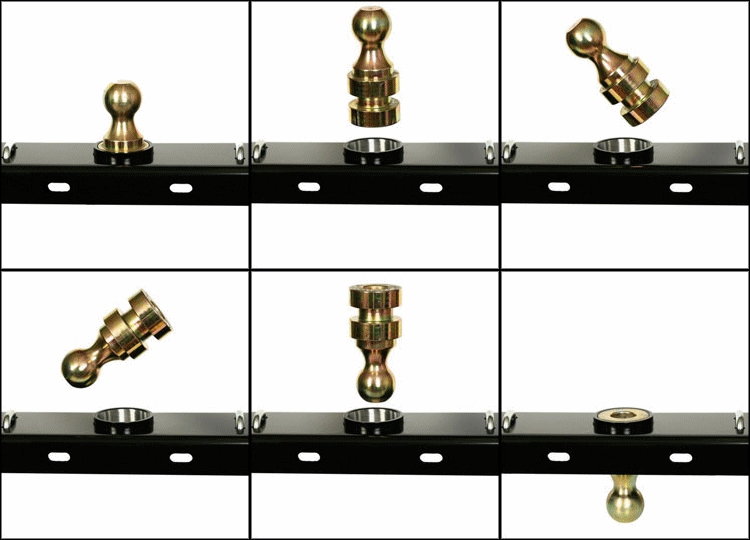
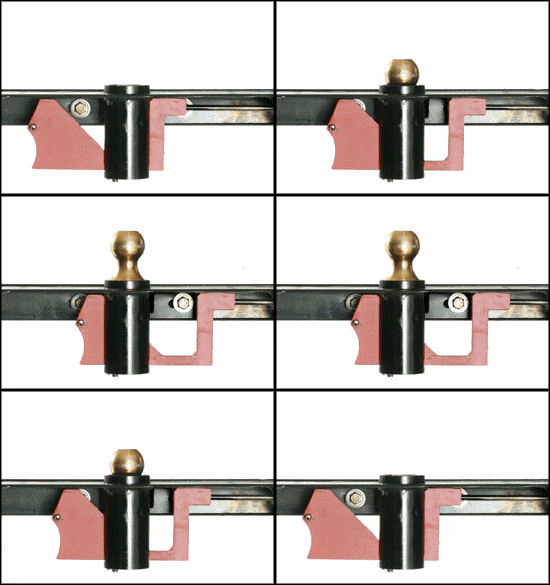


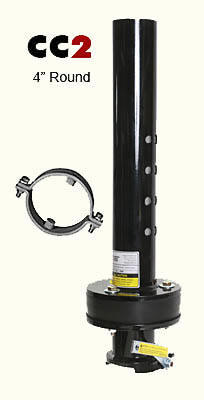 Popup Cushion Coupler Happy Horses Smooth Trailers